Agriculture & Heavy Machinery Solutions in Egypt

When heavy equipment breaks down, waiting weeks for an imported spare part is unacceptable. 2B Digital gives Egypt’s operators and workshops reverse engineering, on-demand part production, SOLIDWORKS, and precision inspection to produce the right part locally.

Let’s start project together!

Tell us about your project and we’ll get back to you within 24 hours.

    What is your name?*

    What company do you represent?

    Phone number?*

    A few words about your project*

    The Backbone of Egypt’s Physical Economy

    Agriculture is one of the largest employers and most strategic sectors of Egypt’s economy, and land reclamation programmes — the Toshka Project in the south and the New Delta Project west of the Nile Delta — are among the world’s most significant agricultural expansion efforts. These new frontiers are driving substantial demand for irrigation systems, mechanized farming equipment, and processing machinery.

    This equipment is mostly imported — tractors, harvesters, irrigation and processing equipment from European, American, and East Asian manufacturers, paid for in scarce foreign currency. When it fails, sourcing spares is hard, worsened by import documentation and currency constraints.

    The heavy machinery sector — construction, material handling, and industrial processing equipment — faces the same challenge at greater scale, given construction at the New Administrative Capital, New Alamein City, and the Suez Canal Economic Zone. A failed excavator hydraulic pump at a giga-project, a broken road roller gearbox in Upper Egypt, or a failed part at a Delta food processing plant: each means days or weeks of delay while the part is procured internationally.

    Egypt Vision 2030’s localization agenda prioritizes agricultural and industrial equipment, targeting domestic manufacturing and maintenance capability to cut hard-currency spend on imported spare parts. 2B Digital’s 3D scanning for reverse engineering, additive manufacturing for on-demand parts, and SOLIDWORKS for equipment design and modification are directly aligned with this agenda.

    The Engineering Problems That Cost Egyptian Operators the Most

    SOLIDWORKS Design & Engineering for Equipment Manufacturers & Operators

    The Most Impactful Solution for Egyptian Agricultural & Heavy Machinery Operators

    Producing a spare part from a 3D scan of a worn or broken original — without the OEM or international procurement, in days rather than weeks — is the most valuable capability 2B Digital offers this sector, and one of the most direct ways to cut hard-currency spending on imported spares.

    The Reverse Engineering Workflow

    Step 1 — 3D Scan the physical component:

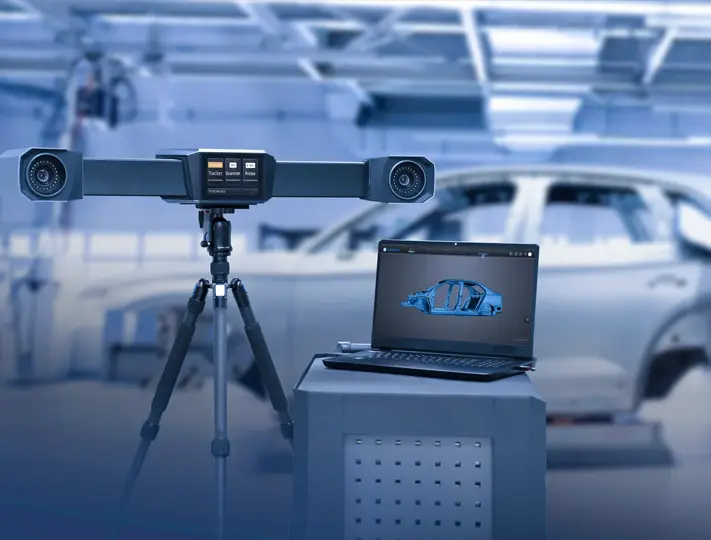
    Using the Hexagon Absolute Arm (with integrated laser scanning) or a structured-light 3D scanner, the component — complete, worn, or broken with enough geometry left — is scanned into a 3D point cloud.

    Step 2 — Generate parametric CAD in Geomagic Design X:

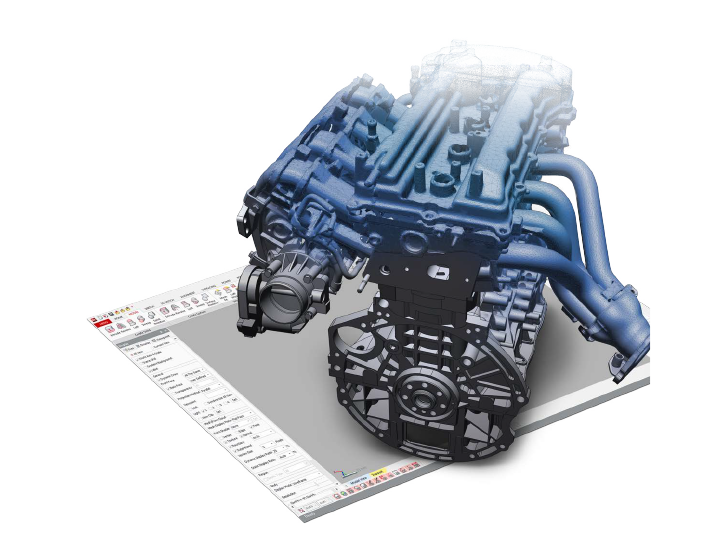
    Geomagic Design X generates a fully parametric, feature-based SOLIDWORKS model from the point cloud — highly automated for simple prismatic parts, combining automatic surface fitting with manual feature extraction for complex geometry like wear plates, impeller blades, and cam profiles.

    Step 3 — Review, validate, and improve:

    The model is reviewed against the scan data for accuracy. Worn geometry is corrected to nominal, and if the original material was inadequate for Egyptian conditions, the model can be updated for an improved alloy.

    Step 4 — Manufacture:

    The replacement part is manufactured by CNC machining for standard geometry, by metal additive manufacturing for complex geometry in exotic alloys, or as a printed near-net-shape blank with CNC finishing.

    Step 5 — Inspect:

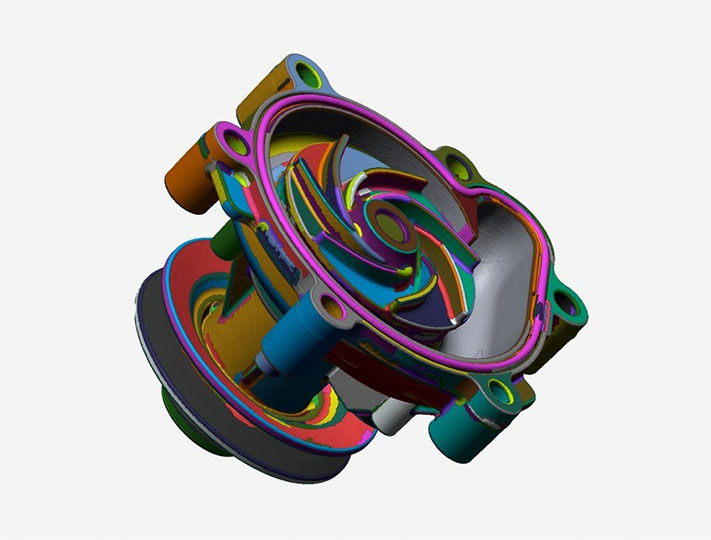
    Geomagic Control X checks the part against the nominal CAD model, confirming critical dimensions are within tolerance before it returns to service.

    Components Commonly Reverse Engineered for Egyptian Agricultural & Heavy Machinery Operations:

    3D Printing for On-Demand Agricultural & Heavy Machinery Parts

    3D Printing

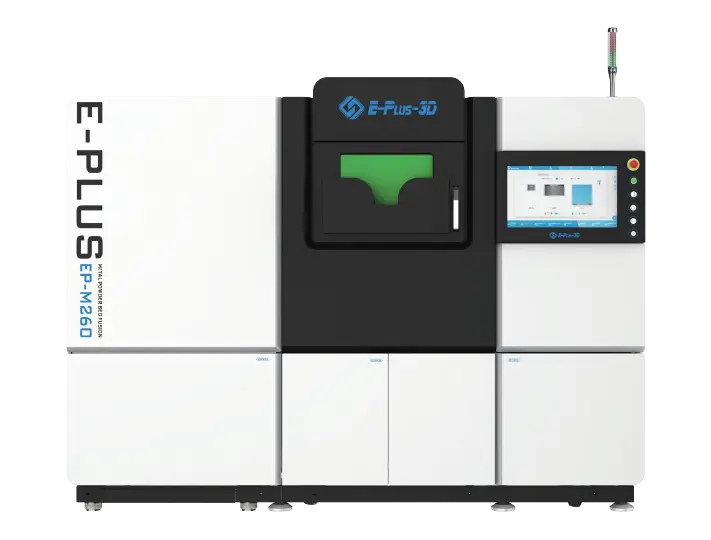
    Eplus3D EP-M260 — Metal AM for Wear Parts and Structural Components

    Metal additive manufacturing is particularly valuable for:

    Compatible materials for agricultural and heavy machinery applications:

    3D Printing

    3DGence INDUSTRY F421 — Polymer Parts for Agricultural & Machinery Applications

    Many machinery applications need functional polymer parts — covers, sensor housings, cable management parts, seal retainers, and custom fittings. The 3DGence F421 produces them in UV-resistant, heat-stable, chemically-resistant engineering polymers.

    Key applications:

    3D Scanning & Inspection for Heavy Machinery in Egypt

    Agricultural and heavy machinery works in demanding conditions where wear and deformation affect performance, maintenance costs, and service life. With agricultural, construction, quarrying, and heavy industrial machinery widely used in Egypt, accurate inspection and maintenance are essential.

    2B Digital’s 3D scanning, portable metrology, inspection, and reverse engineering solutions help maintenance teams, manufacturers, and workshops inspect large components, document wear, verify repairs, and develop replacement parts.

    Complete Heavy Machinery Digital Workflow
    SHINING 3D Scan→Capture Component Condition→Measure Wear & Deformation→Compare to CAD→Generate Inspection Report→Reverse Engineer if Required→Manufacture Replacement Part→Return to Service
    FAQ

    Frequently Asked Questions

    Answers to the questions we hear most often from engineering and manufacturing teams in this industry.

    Yes, this is one of our most common requests. If enough physical geometry survives to scan and reconstruct the nominal form, we can generate a parametric SOLIDWORKS model and produce replacement parts. For completely destroyed geometry, we work from mating components, assembly constraints, and dimensional reconstruction. Our engineers assess feasibility before any commitment is made.

    Yes. When the OEM material is known (or can be inferred from hardness measurement of the original), we can advise on alloys with superior wear resistance, corrosion resistance, or high-temperature performance for Egyptian conditions. Metal AM lets us produce these improved components without the quantity minimums of conventional foundry or forge-based production.

    It depends on part complexity and manufacturing method. Simple prismatic parts CNC-machined in standard alloys from a reverse-engineered model: 5–10 working days. Complex parts by metal AM with post-machining: 10–15 working days. Polymer functional parts by FDM or SLS: 3–5 working days. We give a specific estimate after assessing the physical component.

    Yes. Our portable scanning equipment — the Hexagon Absolute Arm and structured-light scanners — can be deployed across Egypt to scan large components in situ, including farm workshops, construction sites, industrial facilities, and remote locations in Upper Egypt and the reclamation project areas.

    Stop Waiting Weeks for Imported Parts — Produce Them Locally in Days

    Egypt’s agricultural and heavy machinery operators cannot afford to wait months — or spend scarce foreign currency — on imported spare parts. The answer is local reverse engineering and on-demand part production, which 2B Digital has delivered to regional industrial operators for over 25 years.

    With our reverse engineering, metal AM, and precision inspection solutions, the path to a replacement part is measured in days — not procurement lead times.

    Let’s start project together!

    Please fill out the form to request a quote. We will get back to you within 24 hours of receiving your request. Thank you for your patience

      What is your name?*

      What company do you represent?

      Phone number?*

      A few words about your project*